Introduction
If you have spent some time with forex traders, chances are you might have heard someone mention “Cable”. Not to worry, cable is just the nickname of one of the most popular currency pairs in forex, which happens to be the British pound versus the US dollar. The origin of this name is quite fascinating and will give you an understanding of several terms that are commonly used in forex circles.
Quick Answer: Cable is the old nickname of the GBP/USD currency pair in forex trading. The term cable is associated with the historical communication cables that existed between London and New York. GBP/USD indicates how many US dollars are required for buying one British pound. Analysis of Cable takes into account factors like Bank of England policy, Federal Reserve policy, economic data and price action.
Key takeaways:
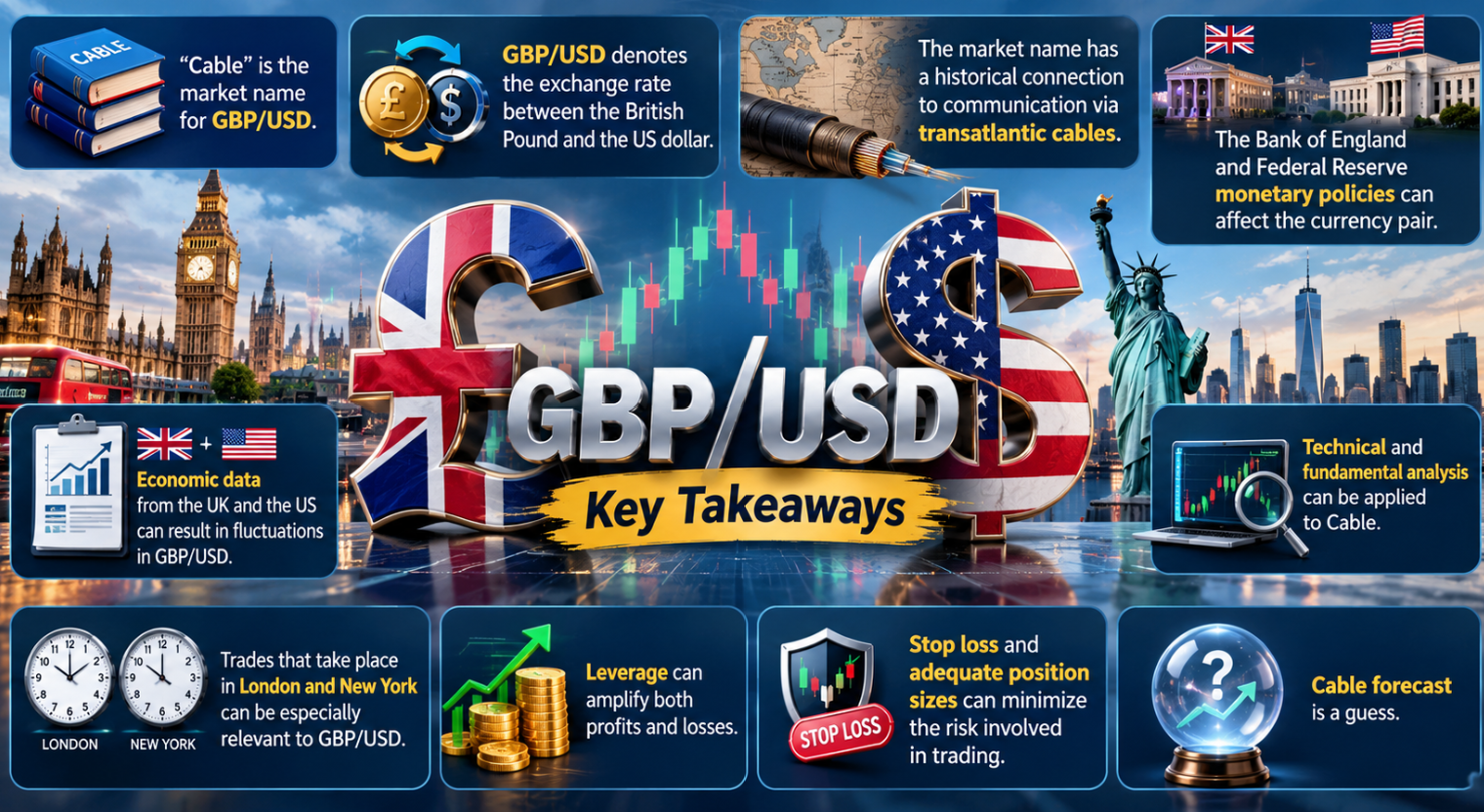
- “Cable” is the market name for GBP/USD.
- GBP/USD denotes the exchange rate between the British Pound and the US dollar.
- The market name is said to have a historical connection to communication via transatlantic cables.
- The Bank of England and Federal Reserve monetary policies can affect the currency pair.
- Economic data from the UK and the US can result in fluctuations in GBP/USD.
- Technical and fundamental analysis can be applied to Cable.
- Trades that take place in London and New York can be especially relevant to GBP/USD.
- Leverage can amplify both profits and losses.
- Stop loss and adequate position sizes can minimize the risk involved in trading.
- Cable forecast is a guess.
What Is Cable in Forex?
Definition of Cable Forex
Cable, in simple terms, refers to the nick-name that is used by traders in the forex market to refer to the pair of GBP/USD. It’s worth noting that GBP refers to the British Pound while USD is the US Dollar, which indicates how many US Dollars a British Pound buys. Any change in cable shows either a weakening or a strengthening of the British Pound in relation to the US dollar.
Is Cable Different from GBP/USD?
No. They both are one and the same. “Cable” and “GBP/USD” are used interchangeably by traders.
Why is GBP/USD Called Cable?
This name comes from times when telephones or internet wasn’t there and traders needed to communicate the exchange rate from London to New York through cables. This nickname has been retained to date even though it’s not necessary anymore.
Why Is GBP/USD Called Cable?
The Historical Link
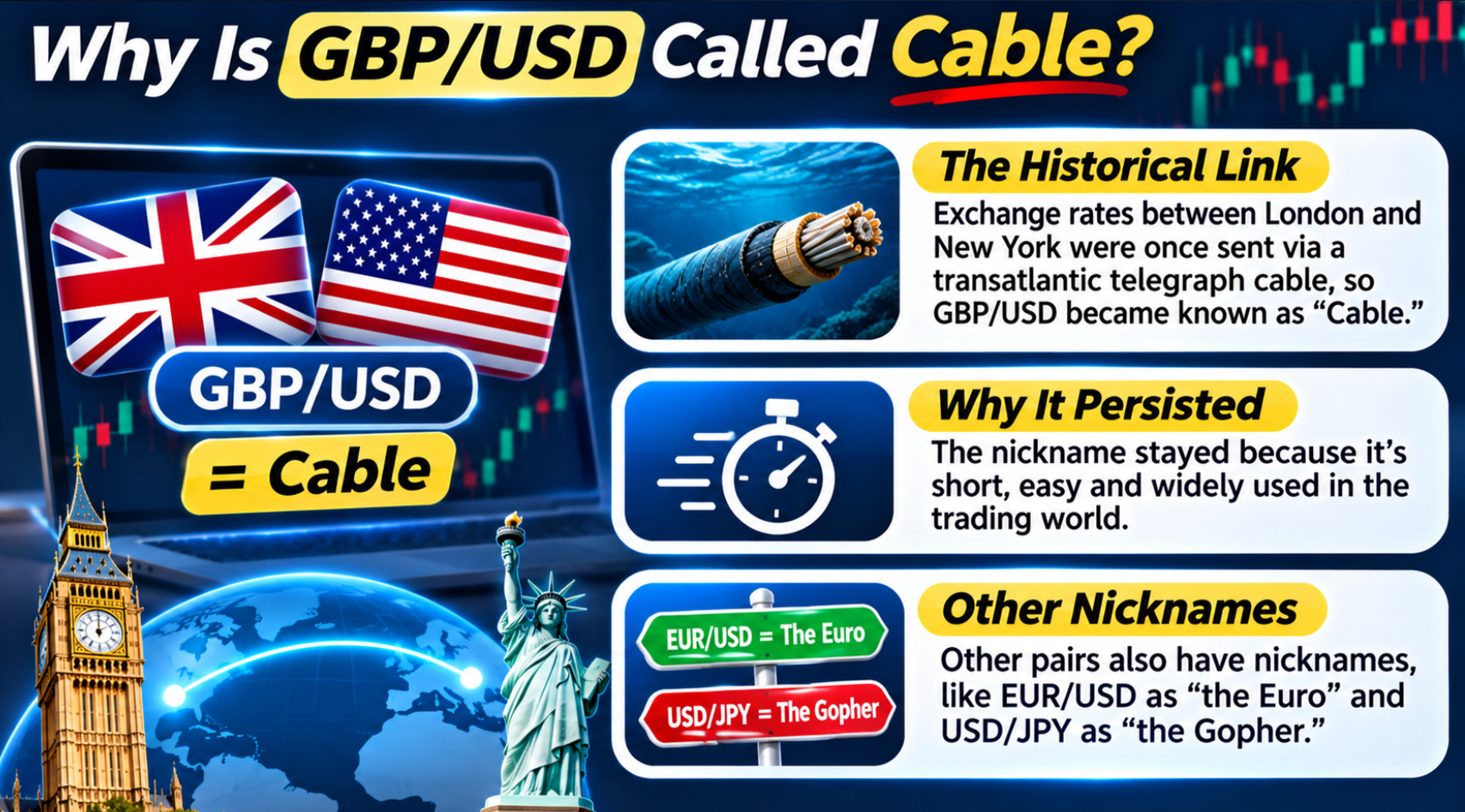
With no modern means of communication in place, transferring information across the Atlantic was a time-consuming process since it required letters carried by boats and it took several weeks for the boat to make its way across the Atlantic. With the introduction of transatlantic telegraph cables linking New York and London, exchange rate information between those two financial capitals could be transferred instantly rather than waiting for a boat to traverse the distance between the two locations. Thus, since the pound-dollar exchange rate was transmitted via that actual cable, the exchange rate got nicknamed “Cable”.
Why It Persisted
One would expect that with the advent of modern technologies such as telephone and online trading, the term would become archaic and eventually fade away. However, it’s not uncommon for finance professionals to refer to things in the field by their nickname long after the term has lost any practical meaning. For example, “Cable” is much shorter to say than “GBP/USD”.
Other Names for Currency Pairs
Cable is not the only currency pair to have a nickname. The EUR/USD currency pair can be simply called “the Euro,” while USD/JPY is called “dollar-yen” or “the Gopher.” However, Cable is arguably one of the oldest and most well-known names for currency pairs, which is why it should be known by everyone.
How the Cable Forex Pair Works
GBP/USD Quote Understanding
In the case of a GBP/USD quote being 1.3000, it simply translates to one British pound being equal to 1.3000 US dollars. When the number increases, it implies that the British pound appreciates against the dollar, whereas a drop in the number indicates depreciation of the pound relative to the dollar. This particular figure fluctuates all the time while the market is open due to various market factors.
Cable Trading “Long”
A “long” Cable trade involves purchasing GBP/USD based on the assumption that the pound will appreciate against the dollar. In the case of the assumption becoming true and the rate increasing, the trade will increase in value; however, if the pound depreciates, the position will decrease in value.
Cable Trading “Short”
“Shorting” means selling GBP/USD in anticipation of depreciation of the British pound against the dollar. If the rate drops as was expected, the trade makes a profit, but otherwise, the trade experiences losses.
What Moves the Cable Forex Pair?
Interest Rates from the Bank of England
As you may know, when the Bank of England changes the rates of interest, the demand for pounds is affected. The higher the rate is, the more attractive it becomes to hold pounds. On the contrary, the lower the rate is, the less interesting becomes holding the pounds. Sometimes, even information about the possible future rates’ change can affect the GBP/USD.
Interest Rates from the Federal Reserve
In a similar way, the decisions of the Federal Reserve influence the demand for the dollars. As Cable is the exchange rate between the pound and the dollar, any changes in the demand for the dollar will move the pair.
Economic Indicators from the UK
Various economic indicators such as inflation rates, GDP growth rates, employment rates, wages growth, retail sales and manufacturing can affect the pound quickly. Depending on the strength of the indicators, they will either support or devalue the pound.
Economic Indicators from the USA
The same goes for economic indicators in the USA: inflation rates, non-farm payrolls, GDP, employment and manufacturing can affect the dollar part of the Cable. In particular, non-farm payrolls are very popular for causing sharp movements in forex.
Market Sentiment
Apart from technical factors, the general state of the markets also counts. As nervousness spreads among investors, they frequently turn to the dollar as a safe place to put their money, which may drive Cable down. If risk sentiment picks up, the trend can be reversed.
Cable Forex Chart: How to Read GBP/USD
What the Price Tells Us
GBP/USD is just a chart that reflects the historical movement of the exchange rate.
Timeframes
The choice of timeframe depends on the trader’s preferences. Extremely short-term traders may consider 1-minutes or 5-minute charts. Hourly charts may provide additional context. Daily and weekly timeframes will be more suitable to identify trends.
Support and Resistance
Support and resistance levels represent price levels at which there was a resistance in the historical price. Support and resistance levels are considered significant as they have a tendency to affect the price but this reaction cannot be assured in advance.
Trends
Price usually moves in one of three directions: upward trend, downward trend or sideways trend. Upward trend is characterized by rising peaks and troughs while a downward trend is reflected in falling peaks and troughs.
Technical Indicators
Moving average, relative strength index and MACD are popular technical indicators used by traders to assess the momentum and trends. These indicators provide additional context but do not predict the future movements of GBP/USD in any way.
Cable Forex Forecast: How Traders Analyse GBP/USD
Fundamental Forecasting
This approach looks at the bigger economic picture — interest rate expectations, central bank policy direction, economic data trends, inflation, and overall growth — to form a view on where the pound and dollar might be headed relative to each other.
Technical Forecasting
This approach focuses on the chart itself: trends, support and resistance levels, chart patterns, indicators, and price action, using historical price behavior to inform expectations about what might happen next.
Why Cable Forecasts Can Be Wrong
No forecast is guaranteed. Unexpected economic data, surprise central bank decisions, political developments, or sudden shifts in market sentiment can all send GBP/USD in a direction nobody predicted. Anyone trading Cable should treat forecasts as one input among many, not a certainty.
Best Times to Trade Cable
London Trading Session
Since the pound is a UK currency, GBP/USD activity tends to pick up noticeably during London trading hours.
New York Trading Session
US market hours matter just as much, since that’s when dollar-related news and data tend to hit the market.
London-New York Overlap
The hours when London and New York sessions overlap tend to see the highest trading activity and liquidity for Cable, since both major markets are active at once.
Economic News Releases
Major UK and US economic announcements — think inflation reports or central bank decisions — can cause sharp, fast price swings and a noticeable jump in volatility around the release.
How to Trade the Cable Forex Pair
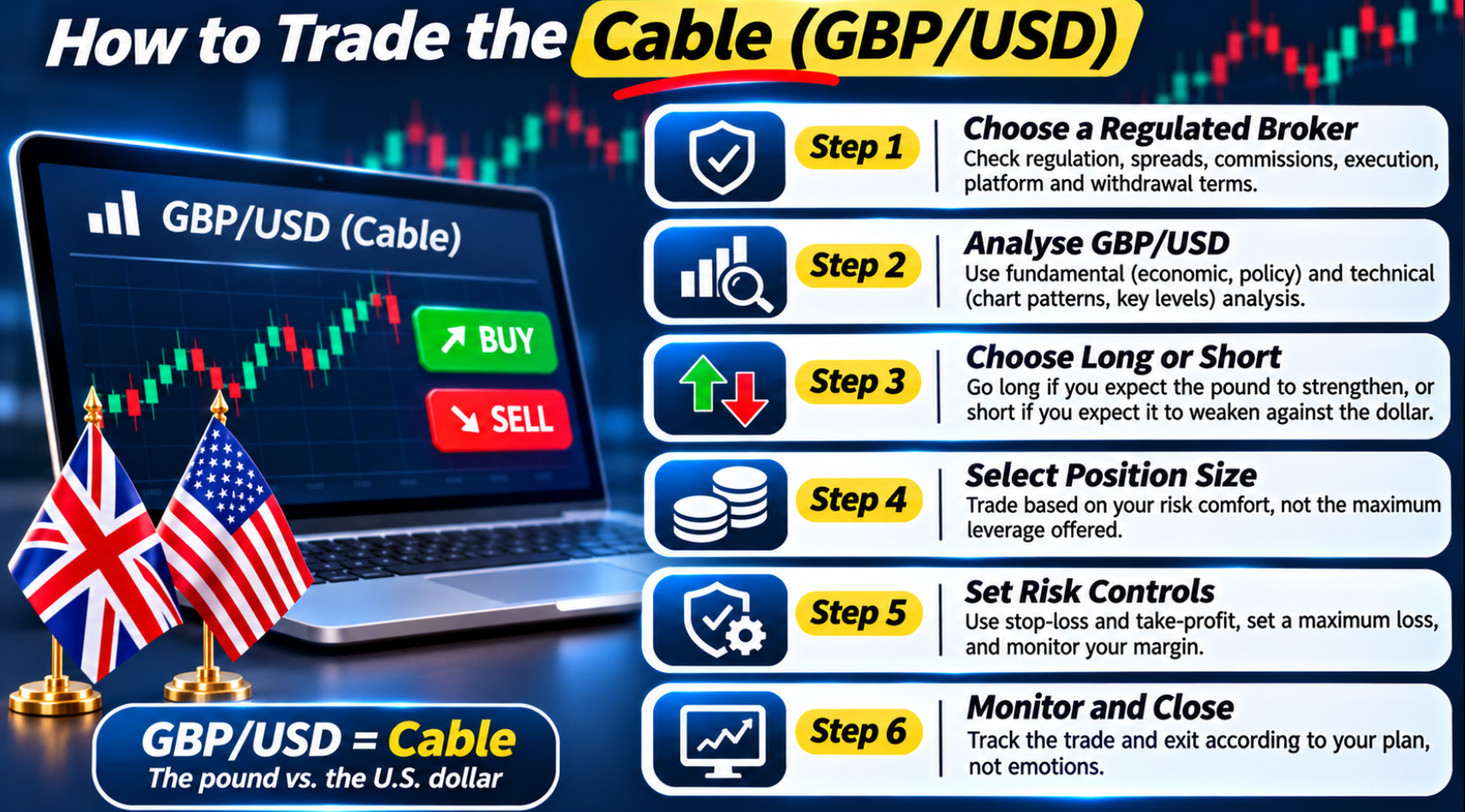
Step 1: Choose a regulated broker. Check regulation status, spreads, commission structure, execution quality, the trading platform, and withdrawal conditions before committing.
Step 2: Analyse GBP/USD. Combine fundamental analysis (economic and policy factors) with technical analysis (chart patterns and price levels).
Step 3: Choose long or short. Decide whether you expect the pound to strengthen or weaken against the dollar, and trade accordingly.
Step 4: Select position size. Base your position size on how much you’re comfortable risking — not on the maximum leverage your broker allows.
Step 5: Set risk controls. Use tools like stop-loss and take-profit orders, decide on a maximum acceptable loss, and keep an eye on your margin.
Step 6: Monitor and close the trade. Track the position and close it according to your original plan, rather than reacting emotionally in the moment.
Cable Forex Trading Costs
Spread is the gap between the buy and sell price, and it’s a cost built into every trade. Commission varies depending on the broker and account type you use. Overnight financing can apply if you hold a leveraged position open past the end of the trading day. Slippage happens when your actual execution price differs from what you expected, which is more common during volatile market conditions.
Risks of Trading Cable
The GBP/USD pair will react rapidly to any significant economic or political development, and with leverage comes the potential for rapid gain or loss, which means that the trade can erase your entire trading account in the same way that it makes money. An economic event can generate a rapid price movement. While a stop loss will be effective in managing risks, it does not provide assurance of an execution price during a volatile market environment. One way that a trader might damage their trading account is by emotional trading.
Cable Forex Trading Strategy for Beginners
No strategy here is guaranteed to work. A trend-following approach involves trading in the direction of an established trend. A breakout approach means watching key support and resistance levels for a potential break in either direction. Fundamental trading involves positioning around major economic releases or central bank decisions. Many traders combine technical and fundamental analysis — using fundamentals to form a market view and technicals to time entries and exits.
Cable Forex Rate Today
GBP/USD changes constantly throughout market hours, so if you’re after the current rate, it’s best to check a live market-data source or trading platform rather than relying on a number in an article like this one.
What can cause the Cable rate to change? UK economic releases, US economic releases, Bank of England decisions, Federal Reserve decisions, political developments, and shifts in overall market sentiment.
Cable Forex vs Other Major Currency Pairs
| Pair | Common Name | Main Currencies |
| GBP/USD | Cable | British pound / US dollar |
| EUR/USD | Euro | Euro / US dollar |
| USD/JPY | Dollar-yen | US dollar / Japanese yen |
| USD/CHF | Dollar-franc | US dollar / Swiss franc |
Each of these pairs is driven by different economic forces and central banks, so what moves one won’t necessarily move another in the same way.
Frequently Asked Questions
What is Cable in forex?
It’s the nickname for the GBP/USD currency pair.
Why is GBP/USD called Cable?
It comes from the transatlantic telegraph cables once used to send exchange-rate information between London and New York.
Is Cable the same as GBP/USD?
Yes, they’re the same thing.
What does Cable mean in forex trading? It refers to the exchange rate between the British pound and the US dollar.
How does the Cable forex pair work?
It shows how many US dollars are needed to buy one British pound, and that value shifts constantly based on economic and market factors.
What affects the Cable forex rate?
Central bank policy, economic data from both the UK and US, and overall market sentiment.